


On June 29, 2026, the “IRRI–MAFF CoolRice Project Kick-Off Meeting”* was held at the headquarters of the International Rice Research Institute (IRRI) in Los Baños, Philippines. Dr. HASEGAWA Toshihiro, President of the Japan International Research Center for Agricultural Sciences (JIRCAS), gave a presentation.
In recent years, rice production has been increasingly affected by rising temperatures, heatwaves, and greater climate variability associated with climate change. High temperatures during the flowering stage can reduce yields through spikelet sterility, while heat stress during the grain-filling stage can lower rice quality and market value. These challenges are no longer limited to tropical regions but are also affecting temperate areas, including Japan. At the meeting, participants discussed future directions for international collaborative research across a broad range of fields, including the development of heat-tolerant rice varieties, crop physiology, climate impact assessment, cultivation technologies, digital agriculture, and greenhouse gas (GHG) mitigation.
The meeting opened with welcoming remarks from IRRI Director-General Yvonne Pinto, who also introduced the “IRRI 2025–2030 Strategy.” This was followed by a video message from Research Director SATO Kazue of the Agriculture, Forestry and Fisheries Research Council Secretariat, Ministry of Agriculture, Forestry and Fisheries (MAFF), Japan, and a special remarks by International Research Officer NOZAWA Satoshi of the same secretariat. They expressed their expectations for the development of heat-tolerant rice varieties and low-cost, low-GHG cultivation technologies under the collaborative project involving IRRI, the National Agriculture and Food Research Organization (NARO), and JIRCAS.
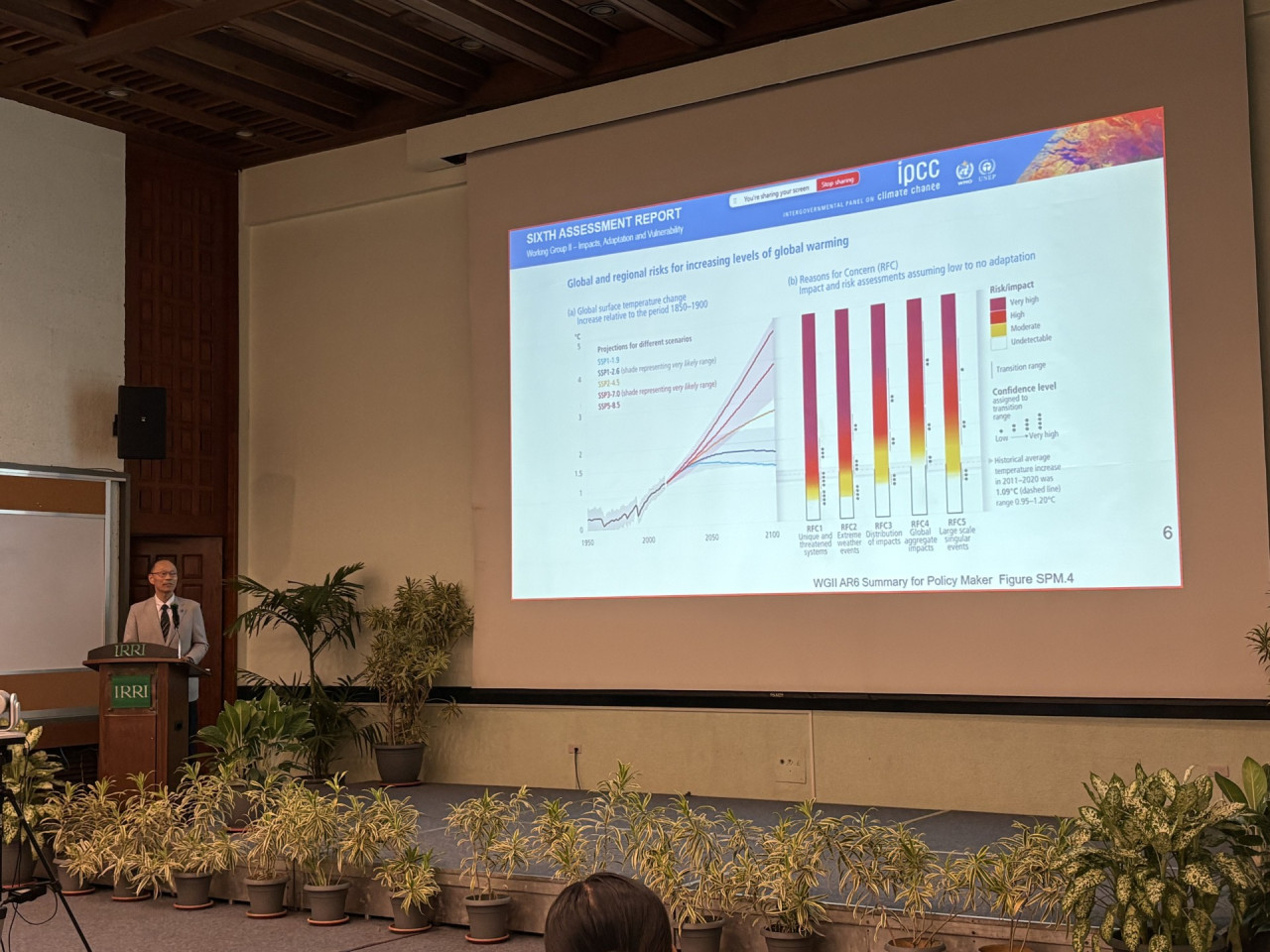
President Hasegawa then delivered a special address, emphasizing the importance of developing heat-tolerant rice varieties and promoting low-cost, low-emission cultivation practices to stabilize yields, reduce production costs, lower greenhouse gas emissions, and enhance agricultural resilience. He stressed that these challenges cannot be addressed through a single technology alone and require an integrated approach combining plant breeding, cultivation techniques, digital information technologies, early warning systems, and collaboration among researchers, government agencies, extension services, and farmers.
Following this, Dr. SAITO Kazuki, Senior Scientist at IRRI, introduced the research collaboration portfolio between MAFF and IRRI and provided an overview of the CoolRice Project. Special presentations were also delivered by Dr. Nese Sreenivasulu, Principal Scientist at IRRI, and Dr. ISHIMARU Tsutomu, Senior Researcher at NARO’s Central Region Agricultural Research Center, highlighting recent advances in the genetic improvement of heat stress tolerance in rice.
In the afternoon, a seminar was held for IRRI staff. Mr. Nozawa presented the latest progress in international research collaboration in the agriculture, forestry, and fisheries sectors. President Hasegawa followed with his lecture entitled “Climate-Resilient and Low-Emission Rice Systems in Asia: Integrated Adaptation, Mitigation and Innovation through JIRCAS–IRRI Collaboration.” During his presentation, he introduced JIRCAS’s medium- and long-term strategic plans and demonstrated, using scientific data, the importance of research on heat-tolerant rice. He also emphasized the need for the integrated platform envisioned by the CoolRice Project and explained how collaboration between Japan and IRRI can lead the development and dissemination of next-generation climate-resilient rice production systems in Asia. In addition, he noted that the outcomes of this research could be linked to Green Asia+: OPTIMA-GS, which was launched in FY2026 as a successor to JIRCAS’s Green Asia project.
Through participation in this program, collaboration between Japan and IRRI in research aimed at improving the sustainability of rice production under climate change has been further strengthened. It also enhanced mutual understanding among participating organizations, contributing to the smooth implementation of the CoolRice Project.
The kick-off meeting attracted considerable attention and was covered by multiple media outlets, including in Japan.
* MAFF Supplementary Budget Project for FY2025: Breeding Heat-Tolerant Rice Varieties and Establishing Low-Cost, Low-GHG Cultivation Technologies for Food Security in Asia.
References
News release from IRRI
https://www.irri.org/news-and-events/news/new-japan-irri-coolrice-project-strengthens-groundwork-heat-resilient-low
Nikkei (June 29, 2026) Developing Rice That Can Withstand Global Warming: Joint Research between Japan and Philippine Research Institutes (Note: in Japanese)
https://www.nikkei.com/article/DGXZQOCB296RB0Z20C26A6000000/
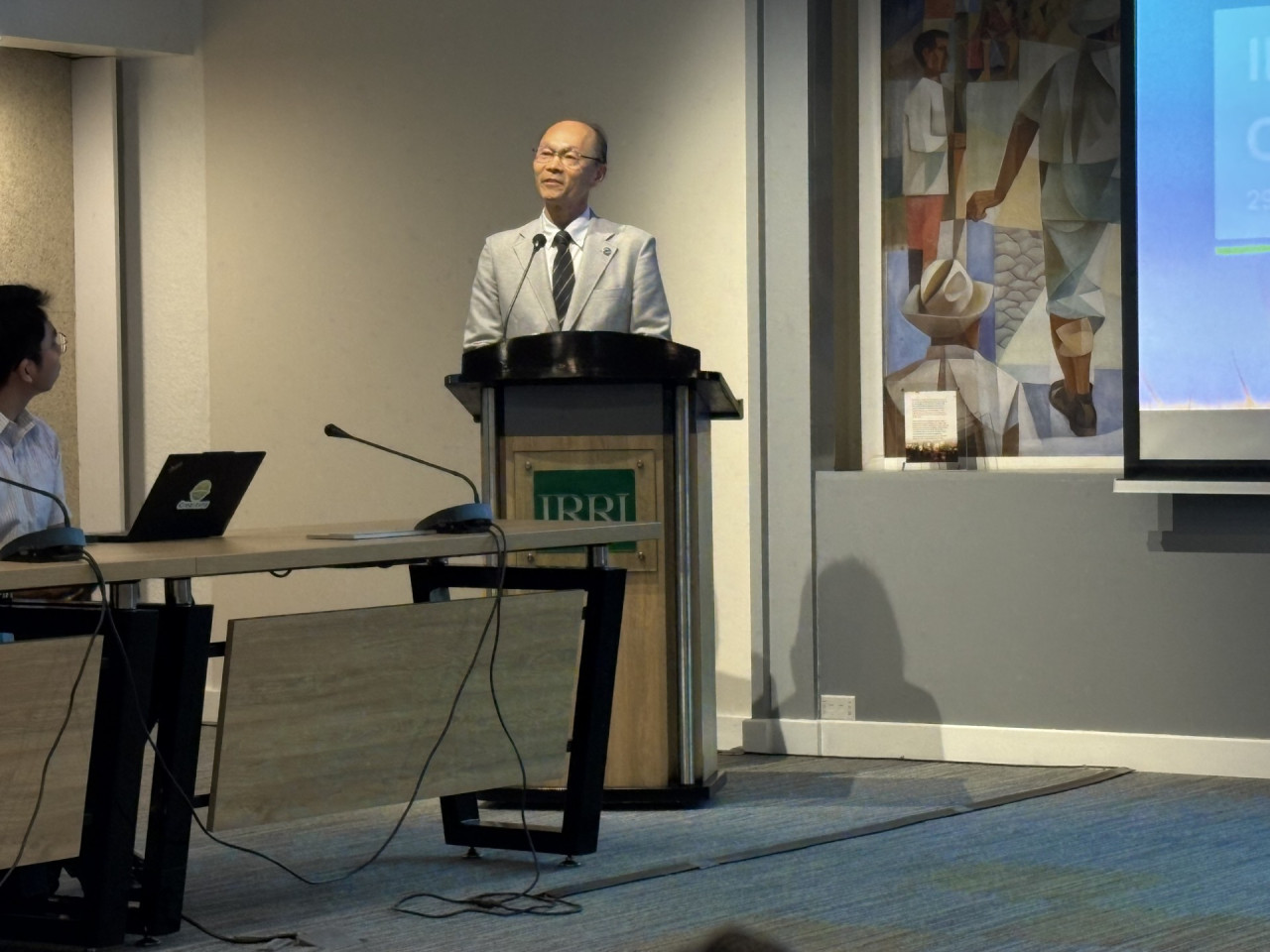
President Hasegawa delivering a special lecture