


On December 1, 2025, on Negros Island in the Republic of the Philippines, the Japan International Research Center for Agricultural Sciences (JIRCAS) held a symposium with its Philippine research partners to review the achievements of their five-year international collaborative research. Hosted by JIRCAS, the event was attended by Ambassador Extraordinary and Plenipotentiary ENDO Kazuya and First Secretary AKASAKA Hidenori from the Embassy of Japan in the Philippines, reaffirming the importance of Japan–Philippines cooperation.
The symposium featured research findings from the “Yama-Sato-Umi agroecosystem connectivity” and the “Climate change measures in Monsoon Asia” projects, which are both implemented under the theme of “Connectivity among the mountains, villages, and the sea.” The presentations showcased a wide range of outcomes covering the entire landscape from upland areas to coastal zones, including technologies for rapid revegetation of degraded mountain slopes, methods for improving agricultural productivity while reducing environmental impact, forest and mangrove conservation, and studies on soil carbon accumulation. Participants engaged in active discussions on the significance of Japan–Philippines collaboration for regional food security and climate change mitigation.
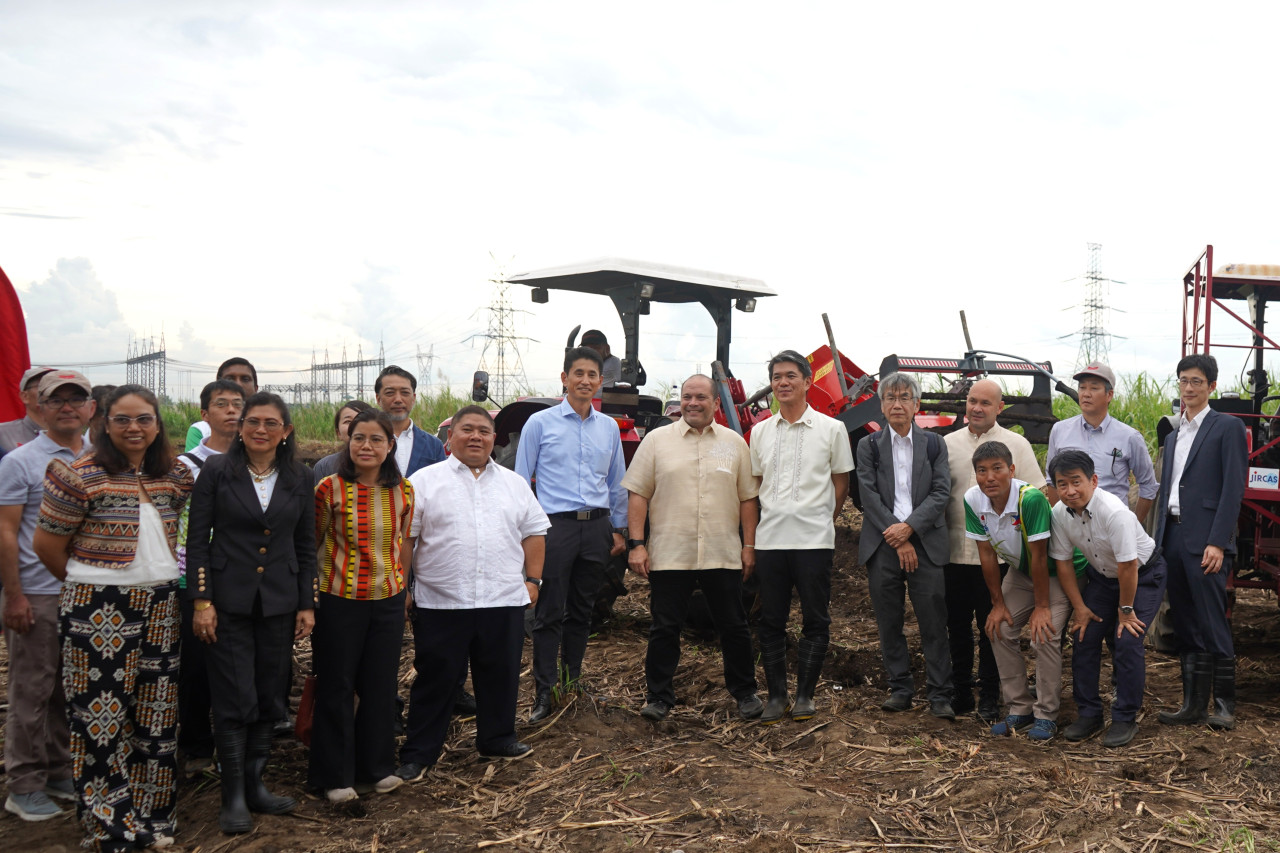
After the symposium, Ambassador Endo observed a demonstration of sugarcane cultivation technologies using a subsoiler and deep-planting planter. Negros Island is the largest sugarcane-producing region in the Philippines, and this technology is expected to contribute to increased productivity, energy efficiency, and soil conservation through the promotion of multi-ratoon cultivation. The technology has been jointly developed by JIRCAS, Yanmar Agribusiness Co., Ltd. (Okayama City), and the Sugar Regulatory Administration (SRA) of the Philippine Department of Agriculture. Ambassador Endo also exchanged views with SRA Administrator Pablo Luis Azcona, further raising expectations for the dissemination of the technology.
Building on the results achieved so far, JIRCAS plans to further promote the dissemination of this technology in the Philippines and Japan’s Ishigaki Island, while also exploring its application to other tropical island regions. The integrated approach emphasizing the interconnection among mountains, villages, and the sea is expected to play an increasingly important role in addressing global challenges such as climate change and food security.
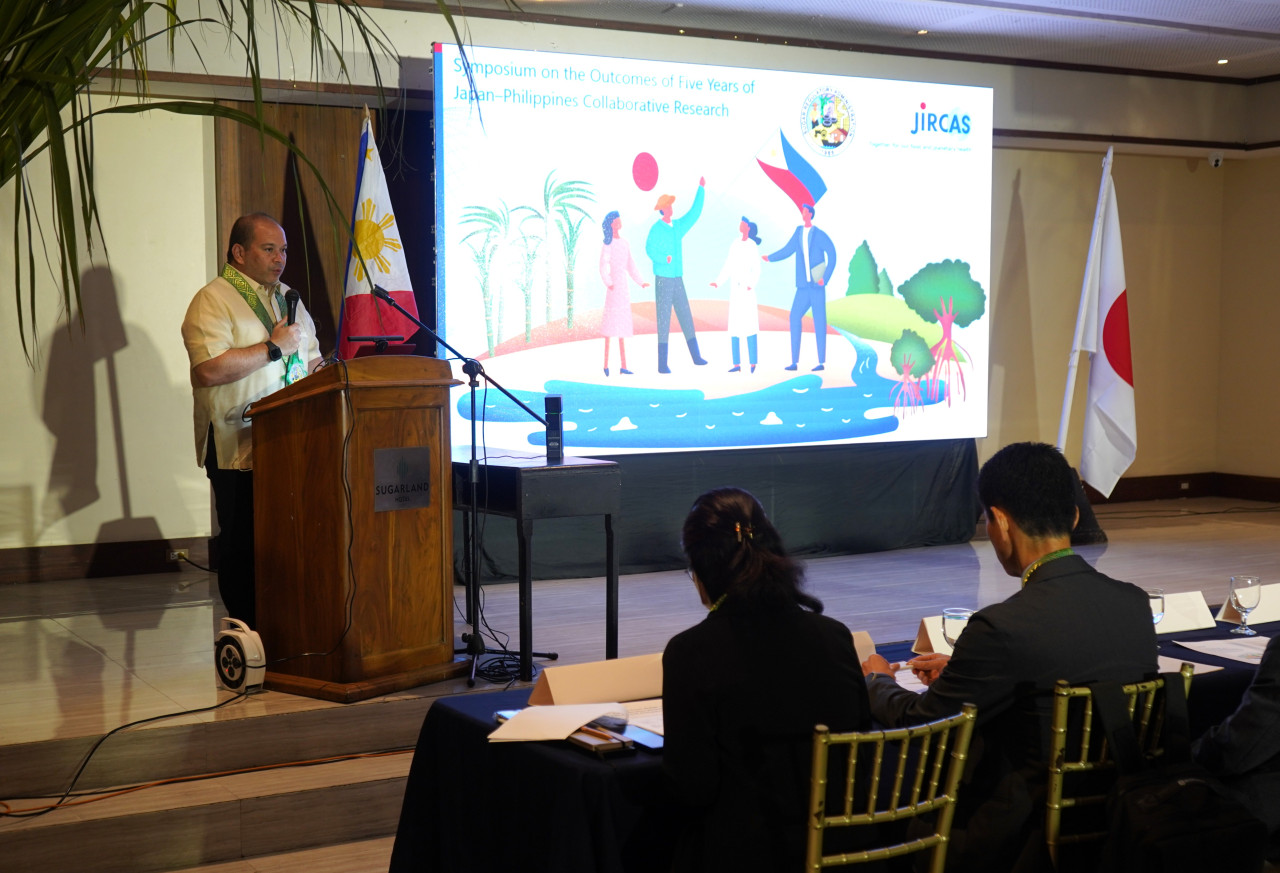
Greetings from SRA Administrator Pablo Luis Azcona
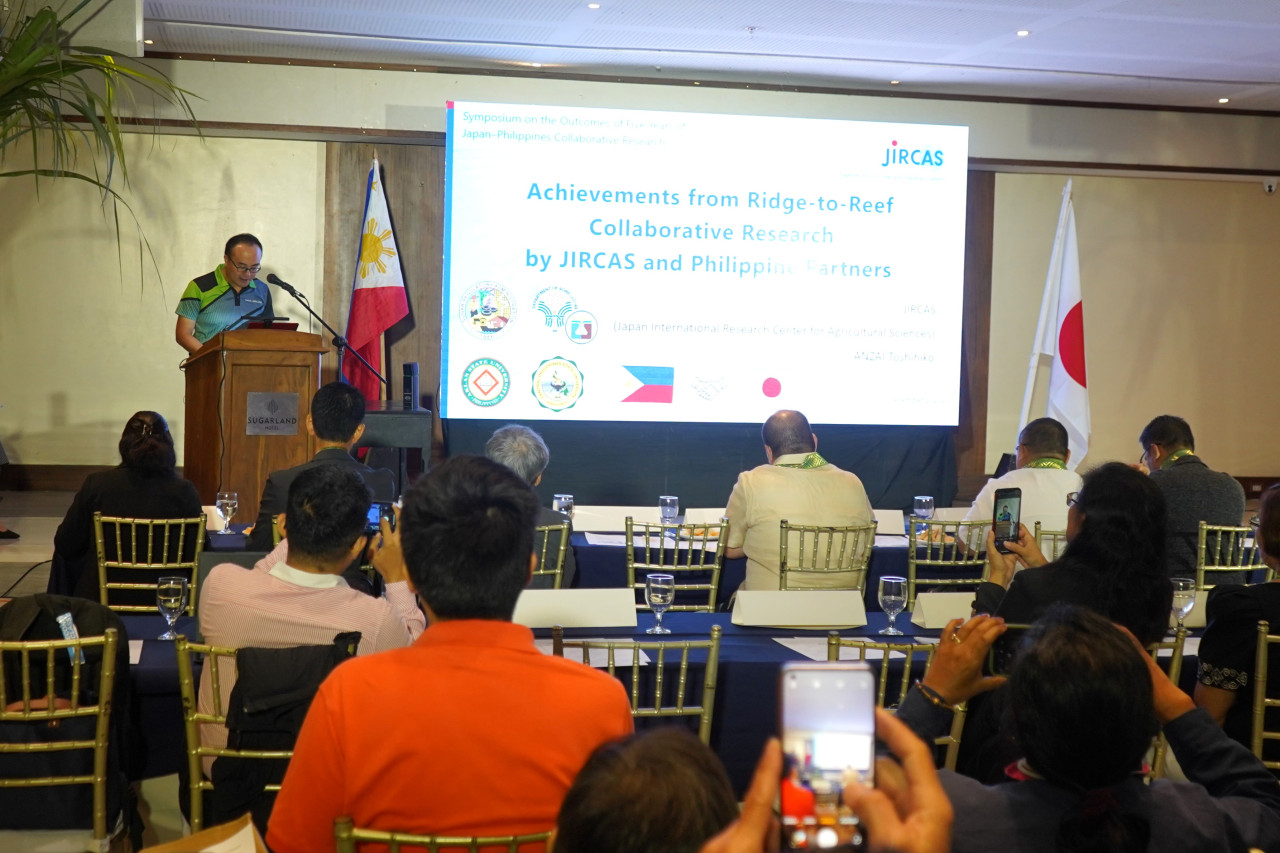
Presentation of research results by Project Leader ANZAI Toshihiko
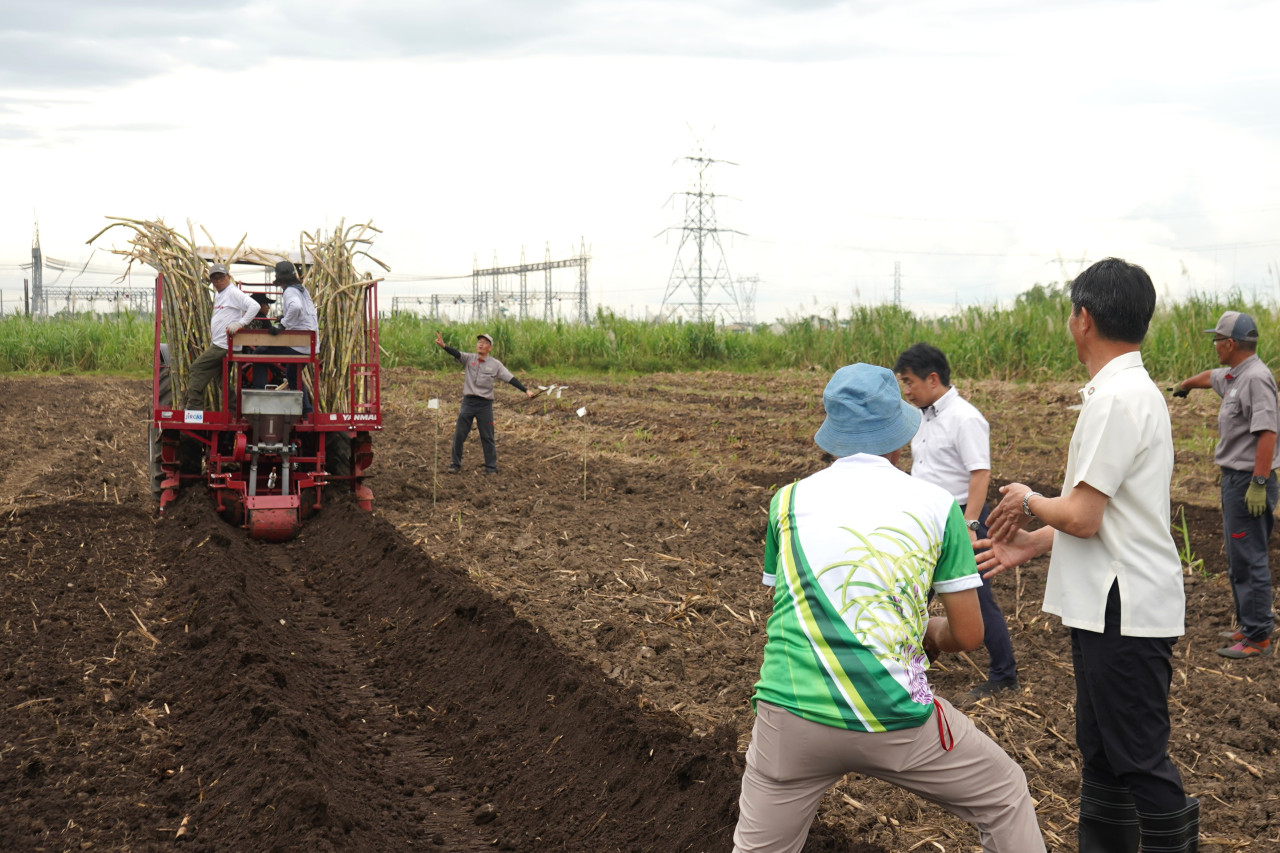
Demonstration of the partial deep tillage machine