


A review article led by Project Leader ISEKI Kohtaro of JIRCAS (Biological Resources and Post-harvest Division) on food security in the semi-arid regions of West Africa (the Sudan Savanna) has been published in the international journal Plant Production Science of the Crop Science Society of Japan (https://doi.org/10.1080/1343943X.2026.2682196).
The Sudan Savanna, which spans several countries including Burkina Faso and Mali, is a major production area for staple crops. However, it faces a triple pressure of population growth, soil degradation, and climate change. Due to its high dependence on rainfed agriculture and limited adaptive capacity, it is considered one of the regions in sub-Saharan Africa facing particularly high food security risks. Urgent action is needed to address the increasing occurrence of heavy rainfall and drought associated with climate change, which alternately damage crops.
The review article’s core argument is that a “soil-centered integrated approach” is essential for adapting to climate change. In this region, soils with different fertility and drainage characteristics exist side by side within just a few hundred meters. As a result, even under the same weather conditions, crop yield responses and the effectiveness of fertilization and planting density vary greatly depending on soil type. The impacts of climate change are not uniform, and both the severity of effects and appropriate adaptation measures differ depending on the soil on which agriculture is practiced. Redesigning crop breeding and cultivation techniques according to soil characteristics is the foundation for effective adaptation.
Based on these insights, the paper discusses the importance of initiatives that link breeding, cultivation, and farm management through a common focus on soil. These include developing crop varieties that can tolerate both drought and excess water, as well as optimizing cultivation practices for different soil types.
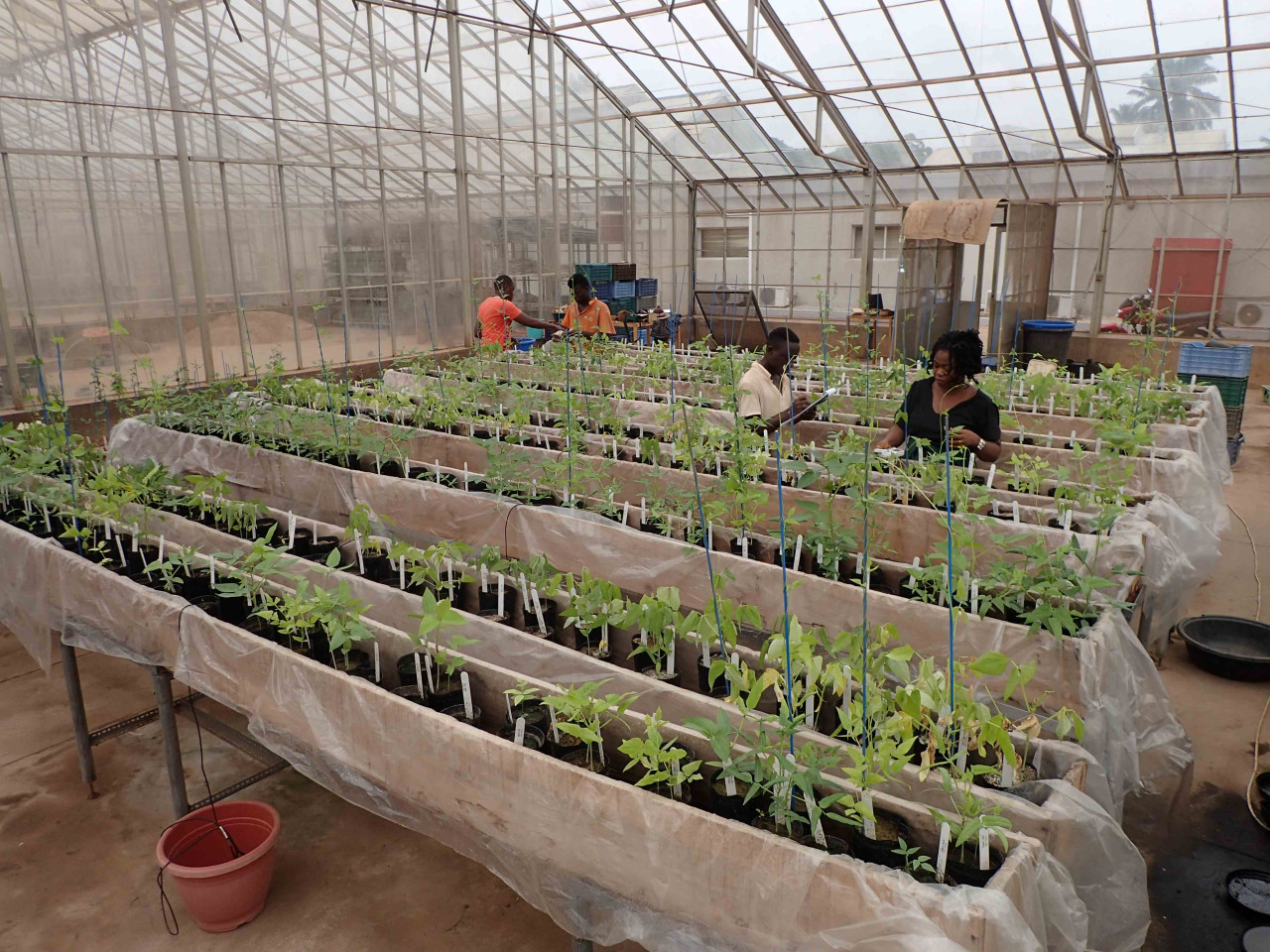
This study summarizes the results of over a decade of field experiments and international collaborative research conducted by JIRCAS in partnership with the National Institute for Environment and Agricultural Research (INERA) in Burkina Faso.
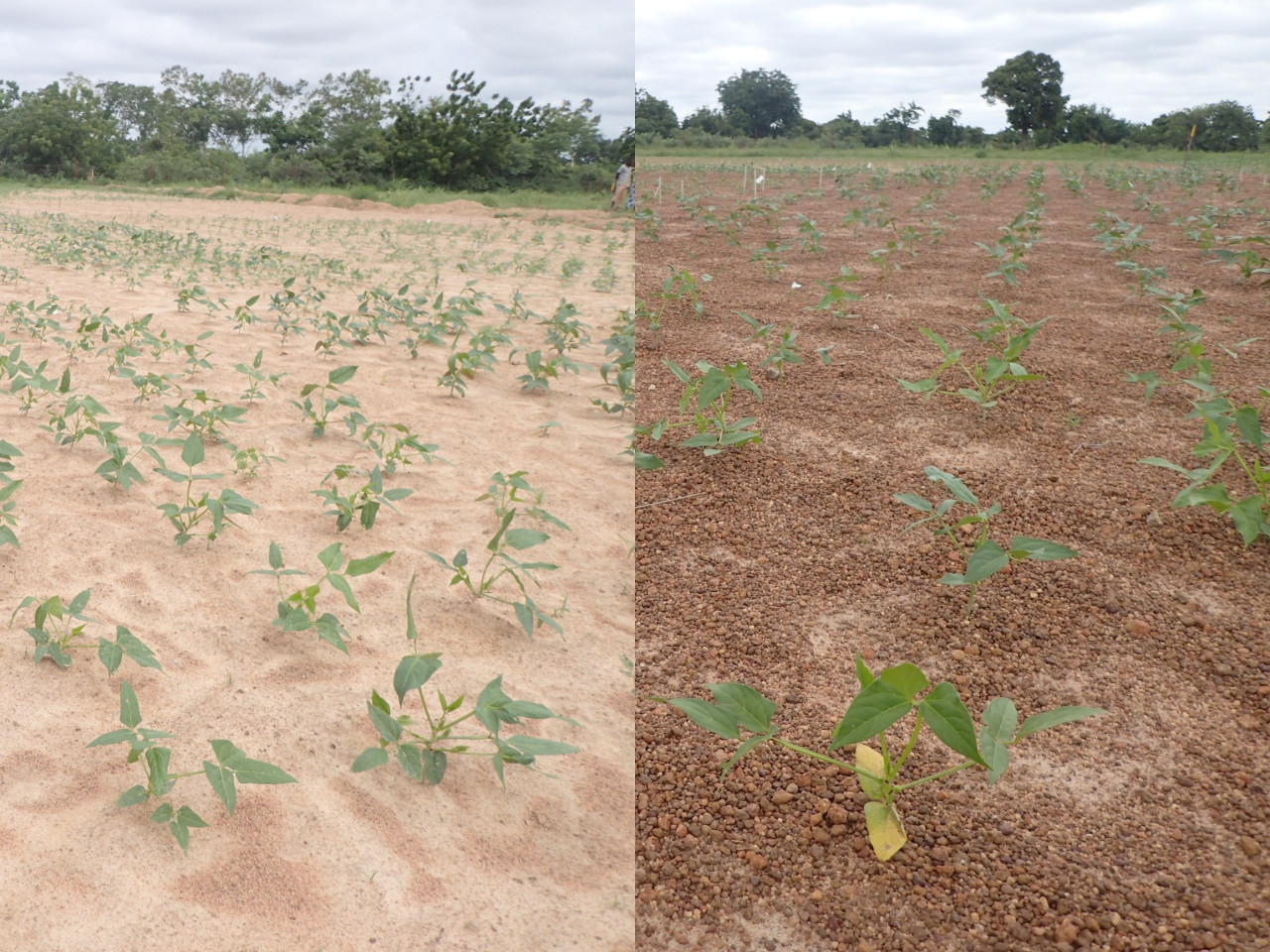
Soil comparison: Differences among representative soils in the Sudan Savanna
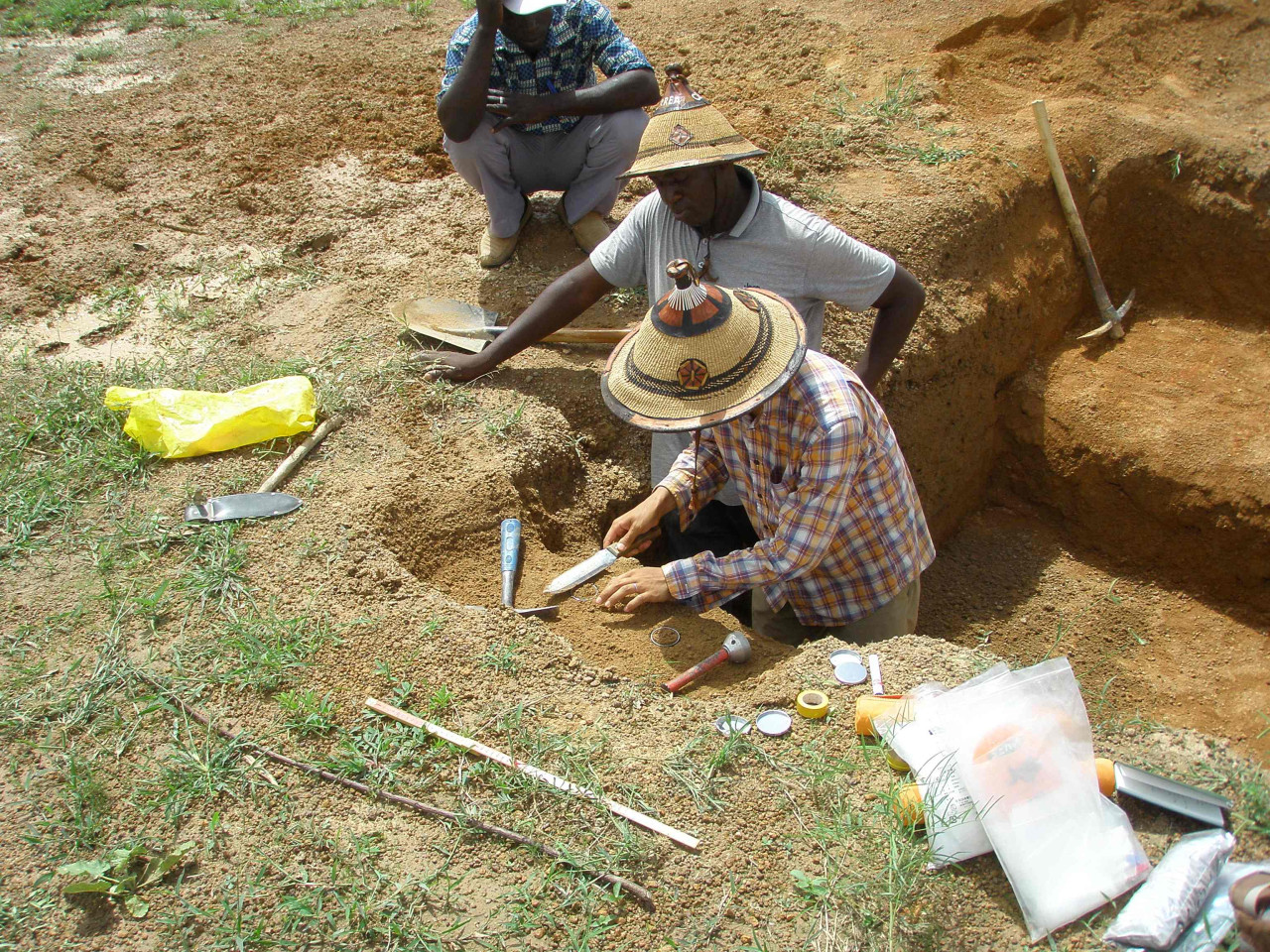
Soil survey: Digging reveals what’s below the surface.
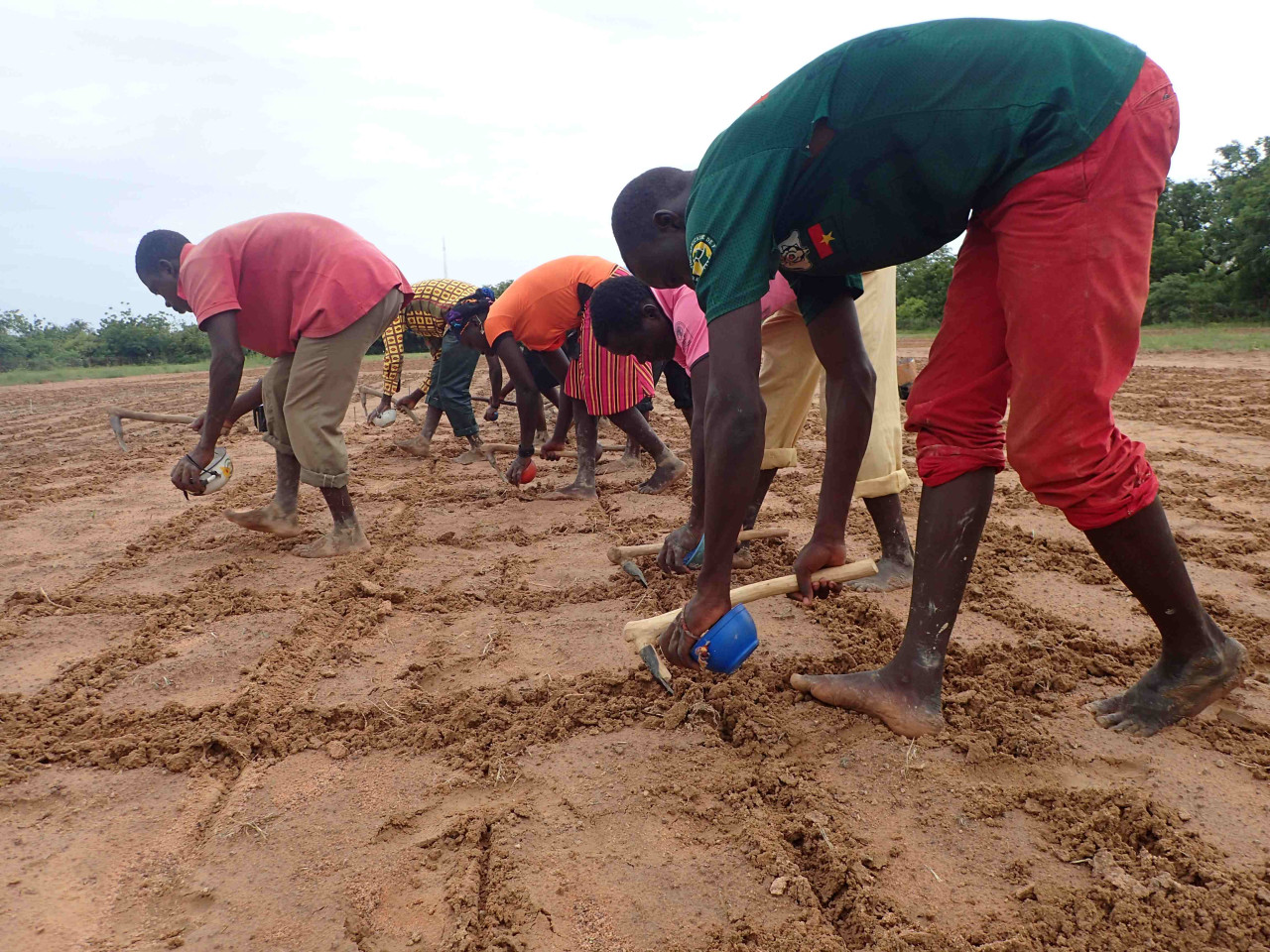
Sowing work in field trials: Local villagers also help with the process.