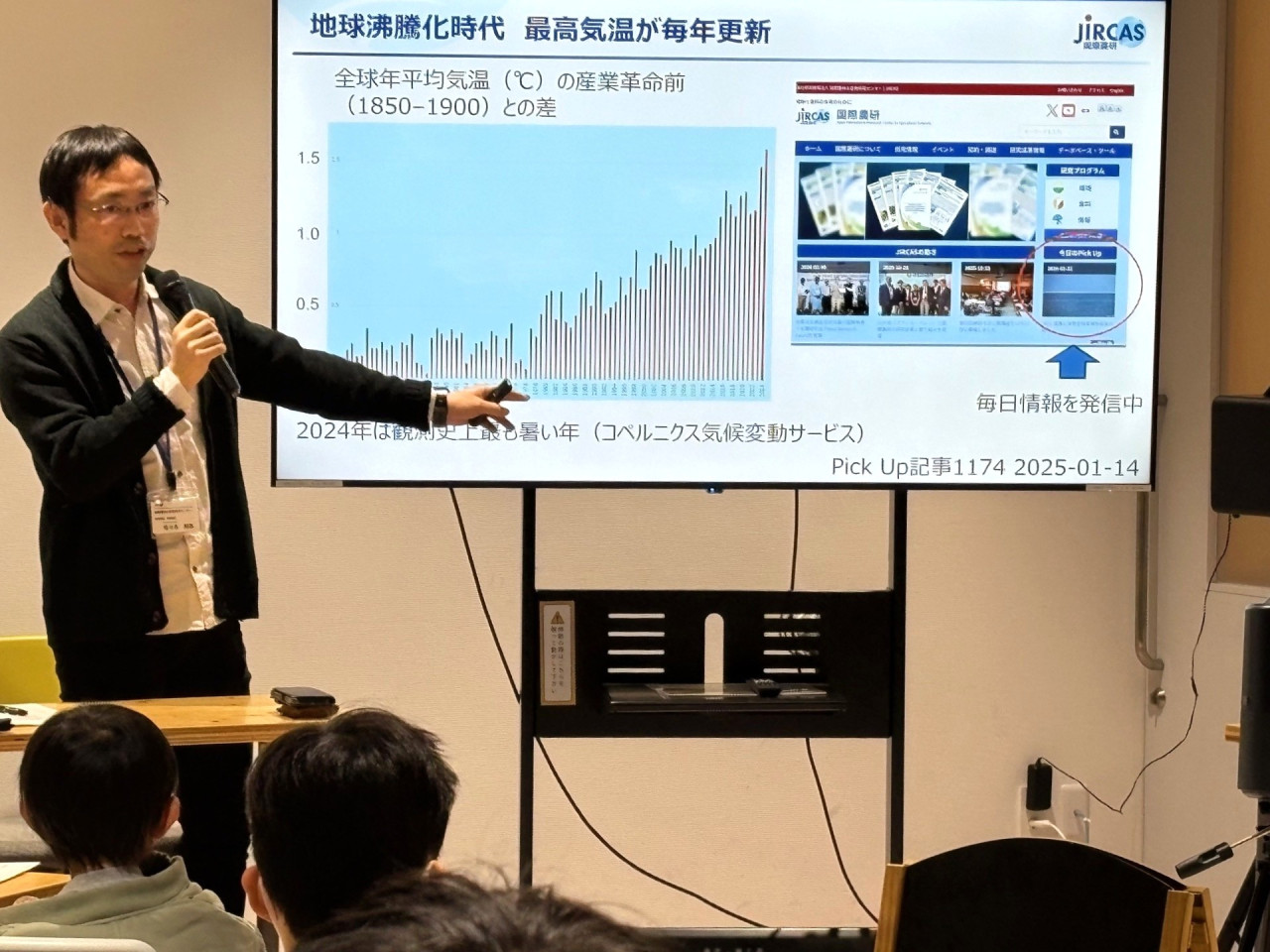



On Wednesday, February 4, 2026, the “Wednesday Night Science Café,” organized by the Tsukuba Science Tour Office, was held at the event space co-en in front of Tsukuba Station. This café is a science communication event designed to make science feel more accessible to the public. It is jointly planned by research and educational institutions in Tsukuba City and has been held every Wednesday evening from December 3, 2025, to March 4, 2026.
Held under the theme of “Rice Cultivation × On-the-Ground Challenges in Asia and Africa: Connecting Technology and Human Resources through Communication, Application, and Collaboration,” the program marked the first time that JIRCAS and JICA Tsukuba collaborated on an event. To kick things off, Dr. OMORI Keisuke, Head of the Information and Public Relations Office at JIRCAS, explained the similarities and differences in the roles of the two organizations while providing an overview of JIRCAS's research. He was followed by Ms. OCHIAI Chikako, Deputy Senior Officer at JICA Tsukuba, who introduced JICA’s support for rice production in Africa through its three main program areas—technical cooperation, loan assistance, and grant aid—as well as initiatives under the Coalition for African Rice Development (CARD). Participants also had the opportunity to sample freshly cooked NERICA rice.
In the main lecture, Dr. SASAKI Kazuhiro, Senior Researcher in the Biological Resources and Post-harvest Division at JIRCAS, gave a talk titled “How Can We Develop Rice That Can Withstand Heat?” He presented research findings on spikelet sterility caused by high-temperature stress and on the identification and breeding of early-morning flowering genes as a countermeasure. Next, Mr. KAKINUMA Shota, a training instructor at JICA Tsukuba, delivered a talk titled “Building Systems to Spread Technology: Lessons from Cameroon,” in which he clearly explained practical approaches to technology dissemination in local rice development projects and mechanisms that enable farmers to earn sustainable profits.
The event was attended by 36 participants, who asked many questions about the familiar topic of rice, leading to lively exchanges of opinions through cross-talk with the speakers. At the conclusion of the event, both organizations introduced their initiatives to develop the next generation of human resources, deepening participants’ understanding of the role of connecting international cooperation with agricultural research on the ground.
The “Wednesday Night Science Café” has become a well-established regular event that communicates the appeal of science through a different theme each time. Participation is free and no reservation is required. YouTube live streaming is also available for those who cannot attend in person, offering opportunities to engage a wider audience and spark greater interest in science.
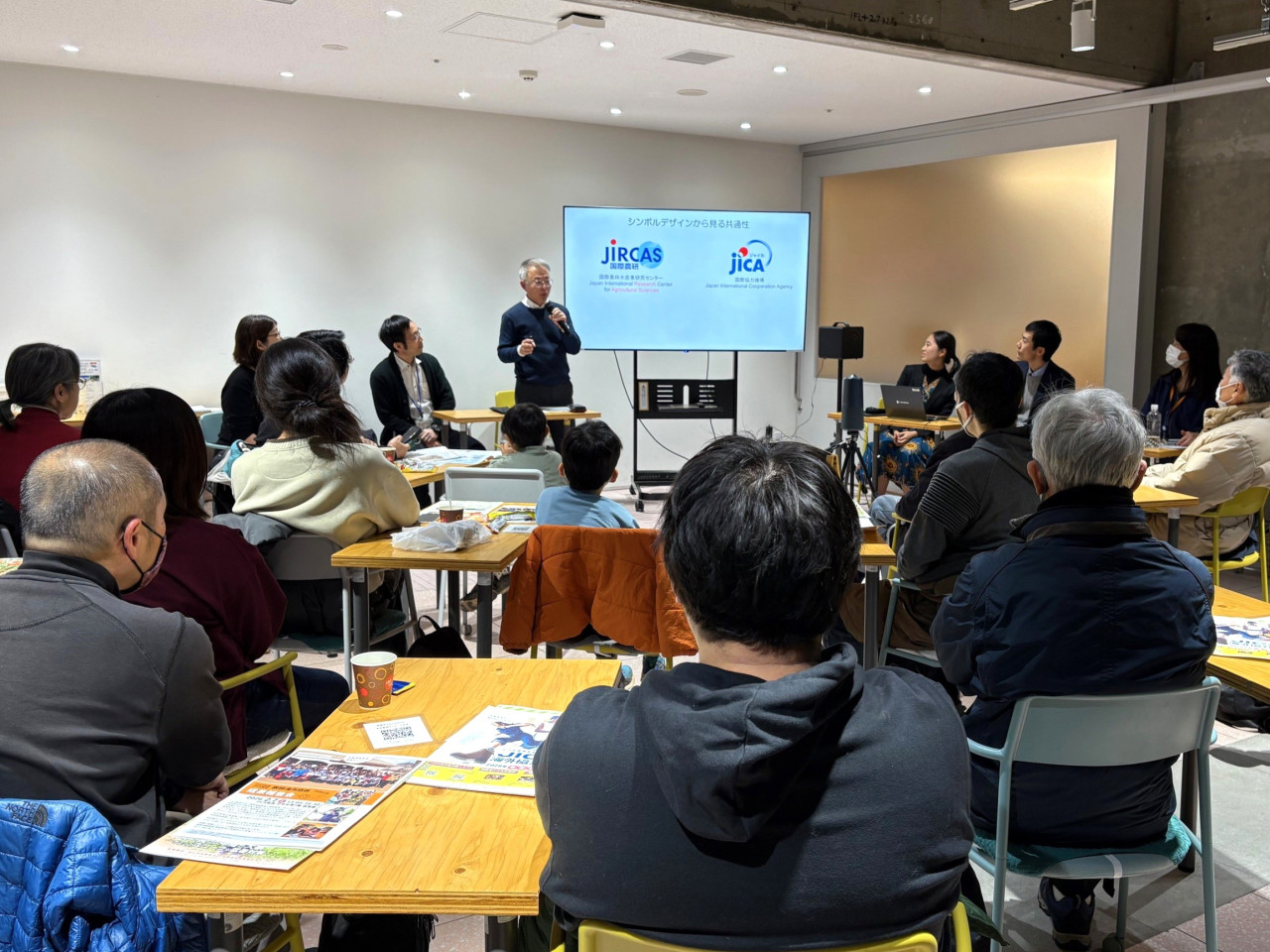
Dr. Omori explains the commonalities and roles of JIRCAS and JICA