



HASEGAWA Toshihiro
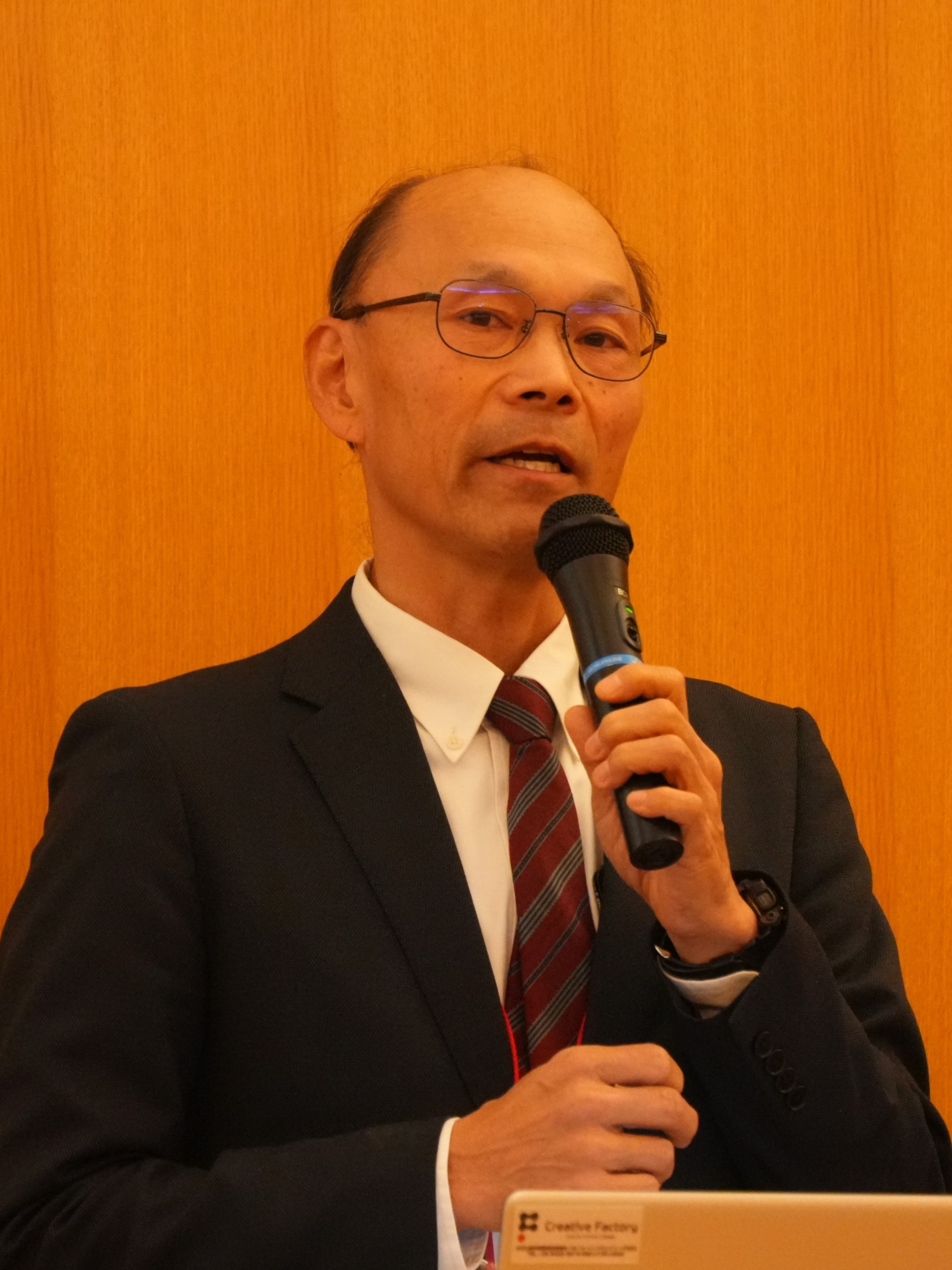
My name is HASEGAWA Toshihiro, and I have recently been appointed President of the Japan International Research Center for Agricultural Sciences (JIRCAS) as we begin our 6th Medium- to Long-Term Plan. My specialization is in crop science and crop physiology, and for many years I have worked on issues surrounding climate change and agricultural production at universities and in research settings at the National Agriculture and Food Research Organization. Together with researchers in Japan and abroad, I have contributed to advancing the assessment of climate change impacts in agriculture and to examining adaptation measures in regions including Asia and Africa.
I also served as a Coordinating Lead Author for the chapter on food and ecosystem products in the Sixth Assessment Report of the Intergovernmental Panel on Climate Change (IPCC), contributing to the communication of the latest scientific knowledge to the international community. This experience gave me firsthand insight into how scientific evidence can directly inform policymaking and international discussions. Building on this background, I hope to apply the knowledge and international networks I have developed as a researcher to strengthen the management of JIRCAS and its external collaborations.
Currently, the global landscape surrounding food, agriculture, and the environment is becoming increasingly uncertain and complex due to the progression of climate change, the rise in extreme events, the spread of infectious diseases, and growing geopolitical risks. The 6th Medium- to Long-Term Plan has been formulated with a seven-year perspective to contribute to global food security and sustainable agriculture, forestry, and fisheries, focusing primarily on developing regions such as Asia and Africa in an era where such changes are becoming the norm. In addition to addressing long-term environmental changes, the plan emphasizes building research and collaboration systems that can flexibly respond to short-term shocks such as conflicts, price surges, and natural disasters.
A key guiding principle of this plan is the recognition that “no single technology can solve complex challenges.” It is essential to combine diverse elements—such as crop breeding, cultivation techniques, resource management, institutional design, and governance—and integrate them in ways that reflect local needs and conditions. Furthermore, we will strengthen research that goes beyond developing individual technologies to evaluate and explain, as systems, how these technologies are positioned within society and what impacts they can generate. We aim to more strategically fulfill our role as an “interface between science and society,” bridging scientific knowledge with policy and practice.
JIRCAS has unique strengths in advancing these efforts. As Japan’s only research institution covering the full spectrum of agriculture, forestry, and fisheries, it is able to address food, environment, and resources in an integrated manner. It also has a long history of locally grounded research and social implementation focused on specific regions such as Asia and Africa, as well as a diverse and highly capable group of personnel active within international networks. Under the 6th Medium- to Long-Term Plan, we will further refine these strengths, integrating field-based validation with international dissemination of information, and aiming to generate evidence that can contribute to global assessment processes such as the IPCC and to policymaking in various countries.
In this era of high uncertainty, we aspire to be a research institution that embraces change and rises to meet it. By collaborating with diverse partners—including domestic and international research institutions, international organizations, government agencies, private companies, and civil society—we will advance impactful research and its implementation toward building sustainable agriculture, forestry, fisheries, and food systems. We sincerely ask for your continued understanding and support for the activities of JIRCAS.