Business Trip to Madagascar (November–December 2025): Yasuhiro Tsujimoto, Project Leader, JIRCAS
Yasuhiro Tsujimoto, Project Leader of JIRCAS and the SATREPS VaryAla Project, traveled to Madagascar from November to December to attend the project's first Joint Coordination Committee (JCC) Meeting.
The first JCC Meeting was held under the chairmanship of the Secretary General of the Ministry of Agriculture and Livestock of Madagascar. During the meeting, the project acronym “VaryAla” (meaning “Rice and Forest” in Malagasy) and the project logo were officially adopted. Participants also agreed on the project's progress to date, the annual work plan, and the budget plan.
During the general discussion, it was agreed that the research team would make greater efforts to undertake beneficiary-oriented activities, such as organizing workshops and preparing technical manuals. It was also agreed that the relevant government ministries would actively participate in the project from the research and development stage onward.
The project involves a wide range of government organizations, including the Ministry of Agriculture and Livestock, which is responsible for food production; the Ministry of Environment and Sustainable Development, which is responsible for forest conservation and greenhouse gas (GHG) emission reduction; the National Office of Nutrition, which is responsible for improving nutrition; and the Ministry of Higher Education and Scientific Research, which is responsible for science and technology. Since collaboration among these institutions is essential for the successful implementation of the project, participants confirmed the need to establish a cross-sectoral platform for sharing data and information among the participating organizations.
In addition, with the start of the rainy-season rice cultivation, field experiments were established in four different cultivation environments under Research Component 1, “Development of Cultivation Technologies for Improving Rice Productivity while Reducing Environmental Impacts.” Rice transplanting was completed, and initial greenhouse gas (GHG) measurements and soil sample collection were successfully carried out.
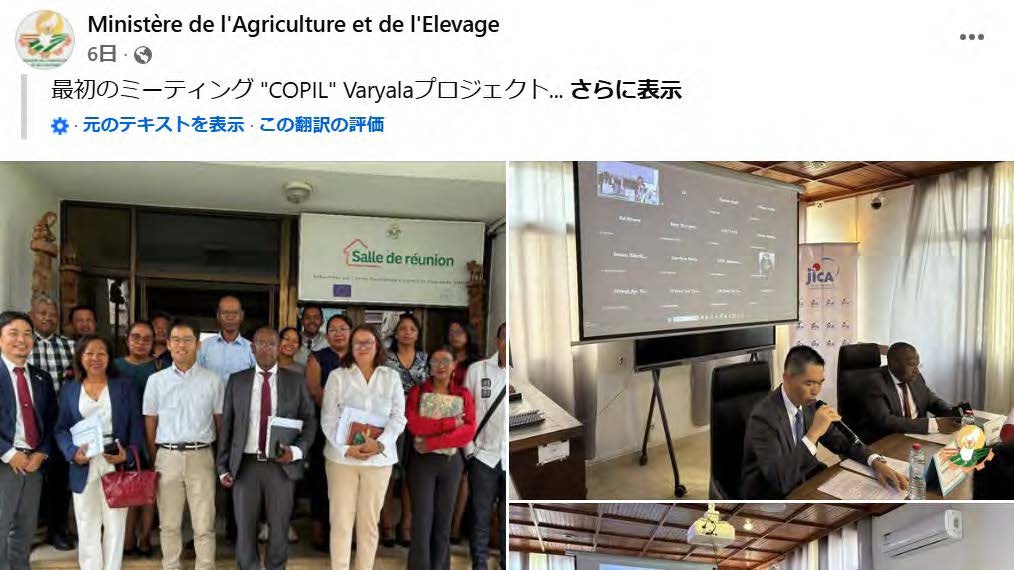
JCC Meeting featured on the official social media account of the Ministry of Agriculture and Livestock of Madagascar
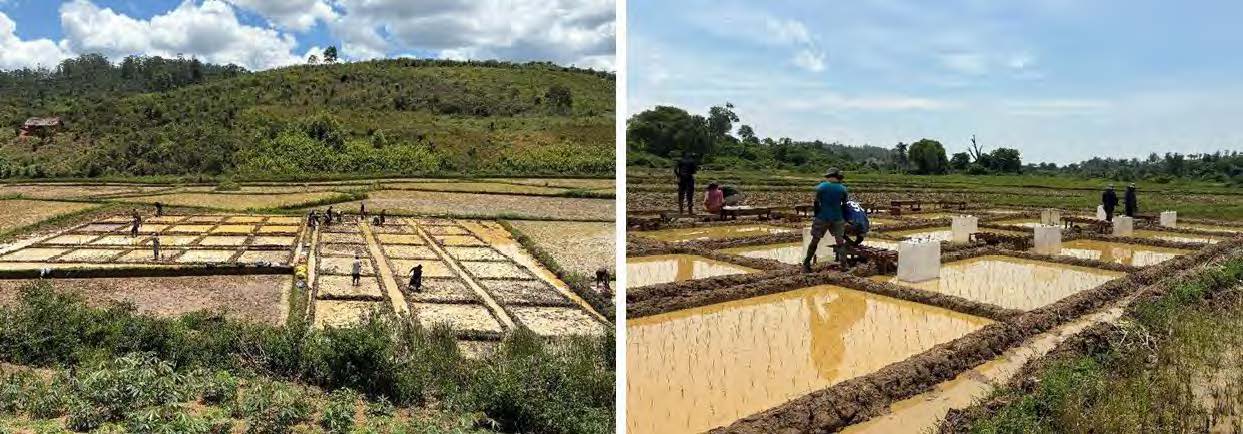
Establishment of a field trial site in Andasibe, eastern Madagascar (left), and gas sampling immediately after transplanting in Ankarafantsika, northwestern Madagascar.