Technical Workshop on Estimation Method and Framework for the Sustainable Implementation of Water Management System for Methane Emission Reduction was held on October 20th-22nd, 2026
From October 20th to 22nd, 2026, a three-day technical workshop was held on "Estimation Method and Framework for the Sustainable Implementation of Water Management System for Methane Emission Reduction." The workshop was attended by 43 participants, including Japanese researchers and representatives from related organizations involved in the project, researchers from the Royal University of Agriculture (RUA) and the Institute of Technology of Cambodia (ITC), as well as government agencies in Cambodia such as the Ministry of Agriculture, Forestry and Fisheries, the Ministry of Water Resources and Meteorology, the Pursat Department of Water Resources and Meteorology (PDWRAM) and the Pursat Department of Agriculture, Forestry and Fisheries (PDAFF), and project stakeholders from the Japan International Cooperation Agency (JICA) Cambodia Office. Representatives from the Japan Science and Technology Agency (JST) and JICA Headquarters, who were visiting Cambodia for Mid-Term Evaluation of the project, also participated.
This technical workshop is the third of its kind, following the kickoff workshop held two years ago and last year's workshop focusing on water management issues related to research output 1. This time, the workshop focused on research output 2, "Methods for Estimating Methane Emission Reductions," and research output 3, "Proposal for a Mechanism for the Sustainable Implementation of New Water Management Systems."
On the first day, at the RUA in Phnom Penh, researchers and their counterparts shared research progress and exchanged opinions through presentations. Research output 2 included reports on the status of methane observations using towers, rice paddy water level observations using drones and satellite data, and the development of MRV (Measurement, Reporting, and Verification) methods for AWD implementation. Research output 3 included reports on the collection and analysis of farm household economics and life cycle assessments (LCA) of greenhouse gases for AWD dissemination. Furthermore, there were reports on participation in LCA training in Japan related to research output 3, and training in Japan on global warming mitigation and adaptation measures, both conducted last year.
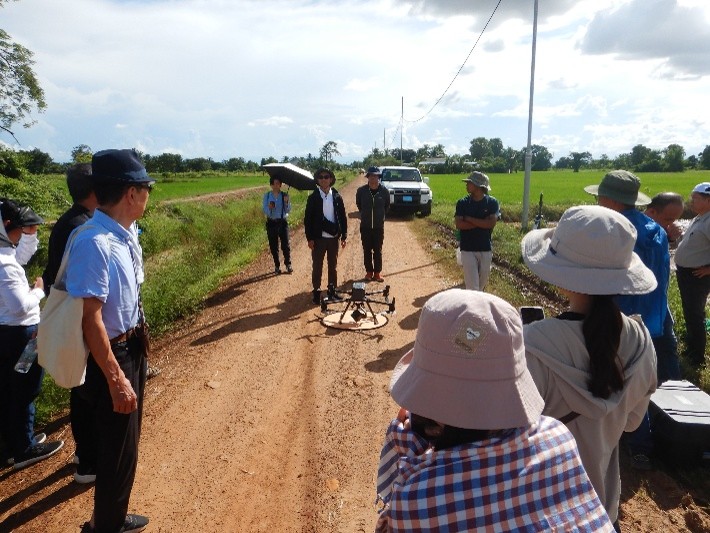
On the second and third days, the group moved to Pursat Province, where the project site is located, for on-site training. Researchers and their counterparts conducted farmer interviews for LCA, demonstrated drone flights, and provided explanations of GHG tower observations and drone observations. This provided a valuable opportunity for local government officials, counterparts, and members of the interim evaluation survey to understand the specific project activities and observation methods.
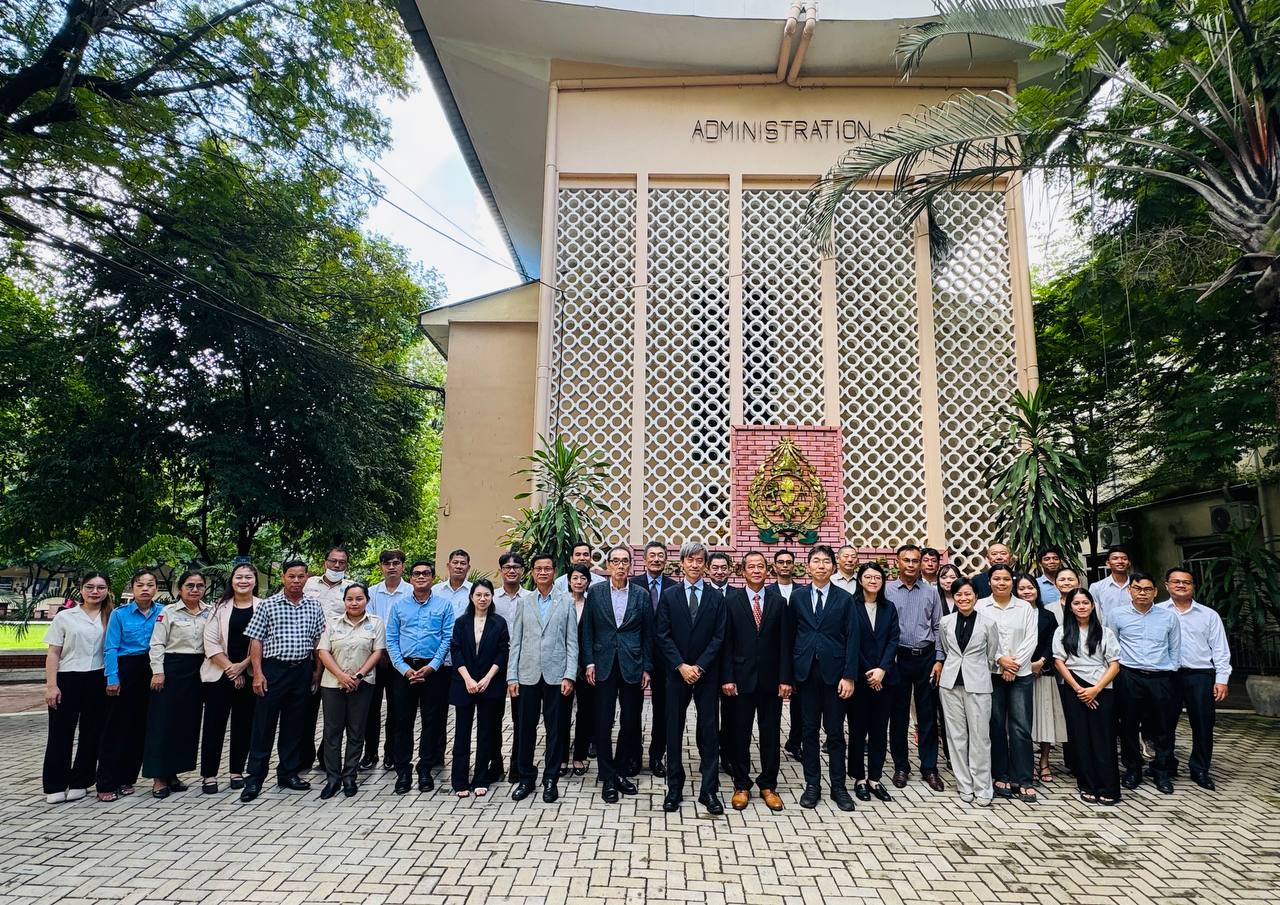
Workshop participants at RUA
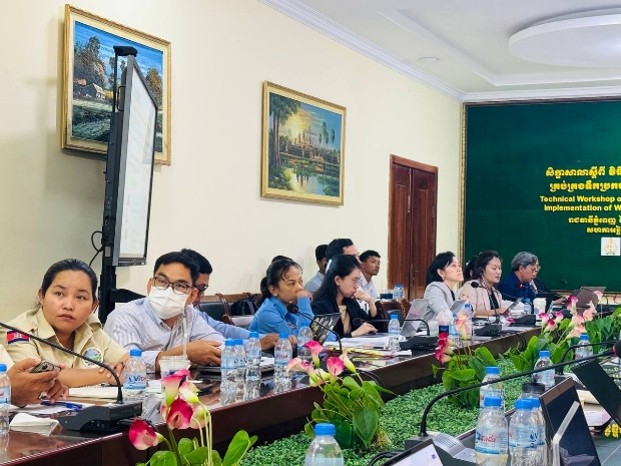
Counterparts presenting at the RUA workshop
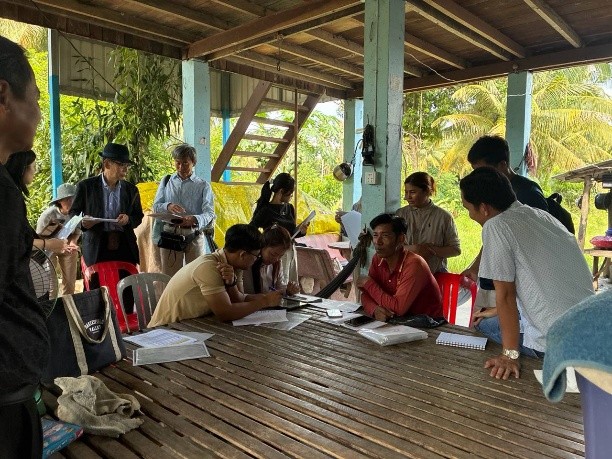
Scenes from a farmer interview demonstration